By Jack Silver, Teledyne LABS Application Chemist and Chromatography Expert
We work closely with our customers and appreciate their perspectives. In fact, customer requests are a strong driver in products developed by Teledyne LABS. However, we sometime find that a request isn’t in the user’s best interest. One example is the “Enable Automatic Peak Hold,” depicted here from a NextGen system.
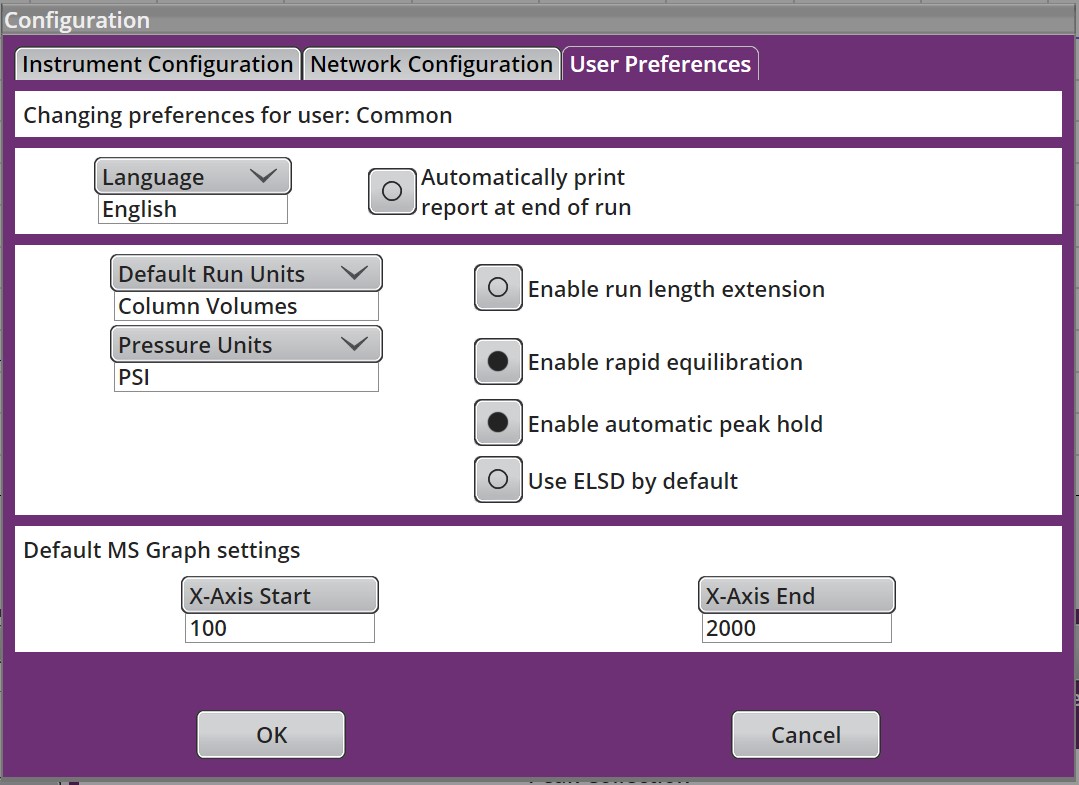
“Enable Automatic Peak Hold” engaged on a NextGen flash system.
What is automatic peak hold, and why isn’t it useful, as you would think? Automatic peak hold is only used when the system is collecting fractions (Collect-Peaks or Collect-All). Detection options set to “Monitor” also will not enable peak collection. When the system collects a peak fraction, PeakTrak starts an isocratic hold during the duration of peak collection during a gradient. Although it seems like this option should delay other peaks from eluting, keep the following in mind:
- A closely eluting peak is already at the bottom of the column; it has almost eluted with a similar solvent composition as the peak that is coming off the column.
- The system was running a gradient during the purification. Due to the column and dwell volumes, the isocratic hold occurs at a stronger solvent composition compared to that at the bottom of the column. Although PeakTrak starts the isocratic hold as soon as a peak is collected, the isocratic hold is already at a higher solvent composition. If you compare the difference in apparent solvent composition of an eluting peak in a scouting run to that in a focused gradient calculated by the Focus Gradient Generator, you can appreciate the extent of the gradient delay.
- The isocratic hold will delay peaks that are still at the top of a column, but these peaks are very resolved from earlier eluting compounds, so the isocratic hold only extends the run time and uses more solvent.
In summary, Isocratic peak holds extend run time without improving resolution.
Below, compound mixture run without (top) and with (bottom) isocratic peak hold. There is no increase in resolution between any of the compounds using an isocratic peak hold.
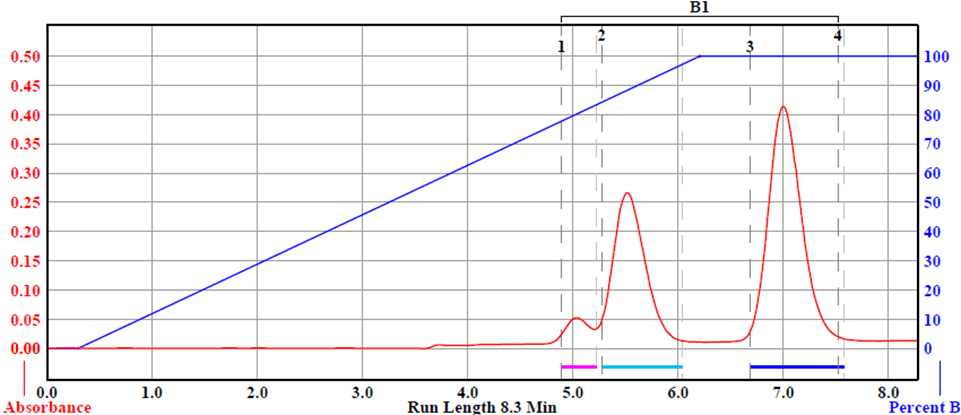
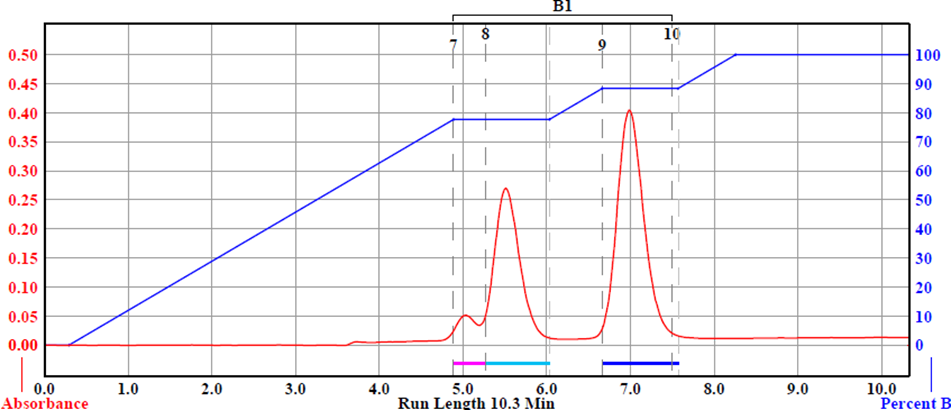 Compound mixture run without (top) and with (bottom) isocratic peak hold.
What about shallow gradients?
Shallow gradients are very nearly isocratic, so little change is expected in resolution for runs using shallow gradients.
Below, shallow gradient without (top) and with (bottom) automatic isocratic hold. There is no change in resolution, yet the run with isocratic holds takes longer to finish.
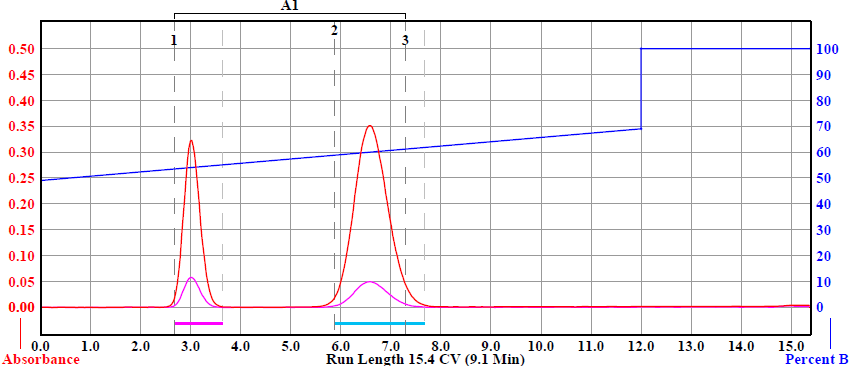
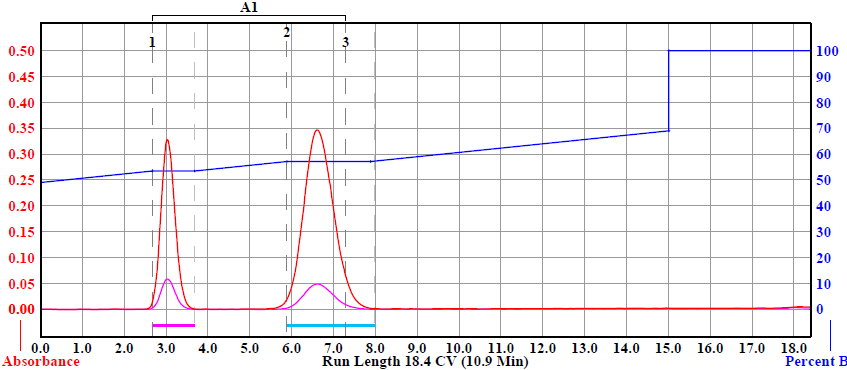 Shallow gradient without (top) and with (bottom) automatic isocratic hold.
So what can I do to improve the resolution of my separation? The Focus Gradient Generator is a better way to improve elution for most compounds.
Below, the Focus Gradient Generator allows improved resolution of very closely eluting peaks (top). The second eluting peak was targeted.
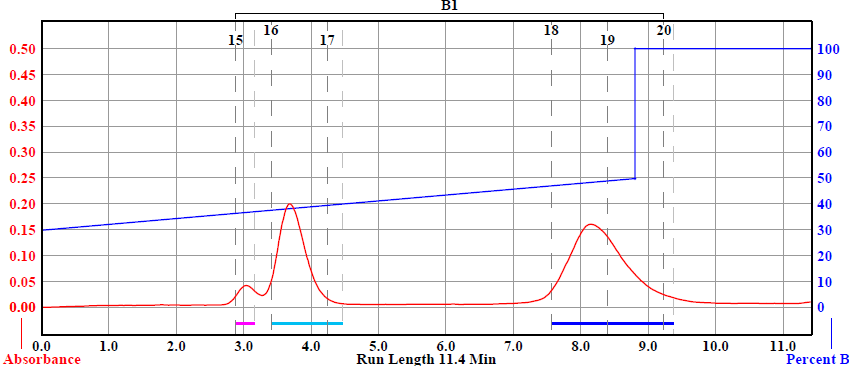
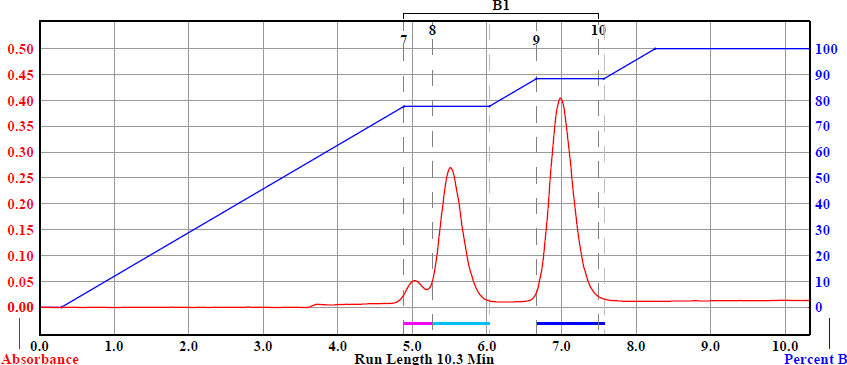 The Focus Gradient Generator improves elution.
The Focus Gradient Generator provided slightly increased resolution for the first two eluting compounds and a large increase in resolution between the second and third compounds, compared to the isocratic hold.
For more information on the Focus Gradient Generator, please reference the following resources, which demonstrate the use of this feature for peptides, carbohydrates, and even how to create methods for very large columns:

