By Jack Silver, Teledyne LABS Application Chemist and Chromatography Expert
Thin layer chromatography (TLC) is an effortless way to develop flash chromatography methods. However, TLC plates may not give the expected results because the silica used on the plates often differs greatly from that used in the column.
The retention on a column in column volumes is CV=1/Rf, where Rf is the retention factor on the TLC plate, assuming the TLC plate is run properly. The following example uses dimethyl yellow run in 10 percent ethyl acetate in hexanes:
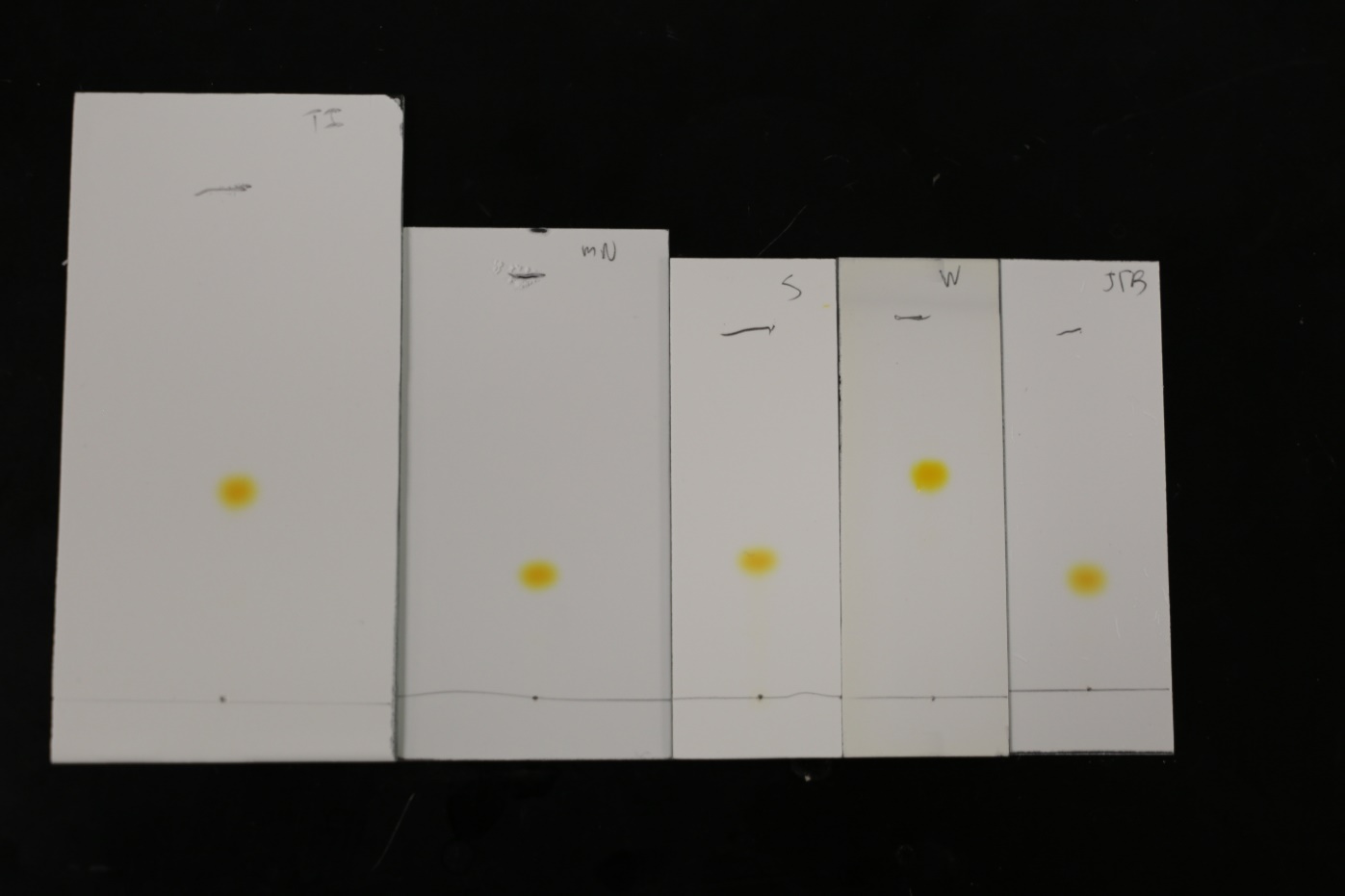
The TLC plates were all run in the same fashion using a chamber saturated with hexane and ethyl acetate (90:10 v/v). The solvent front and spot movement from the origin were measured and the CV calculated for each plate. The results are tabulated below:
Calculated CV values for the various TLC plates.
The actual elution time was 3.0 CV for dimethyl yellow on RediSep Silver columns.
|
Plate No. |
Solvent front (cm) |
Dimethyl Yellow (cm) |
CV |
| 1 | 7.8 | 2.7 | 2.9 |
| 2 | 6.3 | 1.8 | 3.5 |
| 3 | 5.5 | 2 | 2.8 |
| 4 | 5.6 | 3.3 | 1.7 |
| 5 | 5.4 | 1.7 | 3.2
|
Teledyne LABS’ ISCO brand TLC plate gave the closest result to the actual column elution. The plate is larger so that the retention factor can be measured for optimum chromatography. Good flash chromatography occurs with a CV range of 2 to 5 CV corresponding to an Rf range of 0.5 through 0.2. This range generally provides sufficient retention from early eluting compounds while allowing the chromatography to be completed in a reasonable time. In addition, sample loading can be estimated by the difference in CV. As the spots will be in the lower part of the TLC plate, a larger plate makes it easier to accurately measure the Rf values and calculate loading.
Below, Teledyne ISCO universal test mix (phenacetin and N-benzylbenzamide) was run with TLC plates from different vendors (ISCO plate on far left).
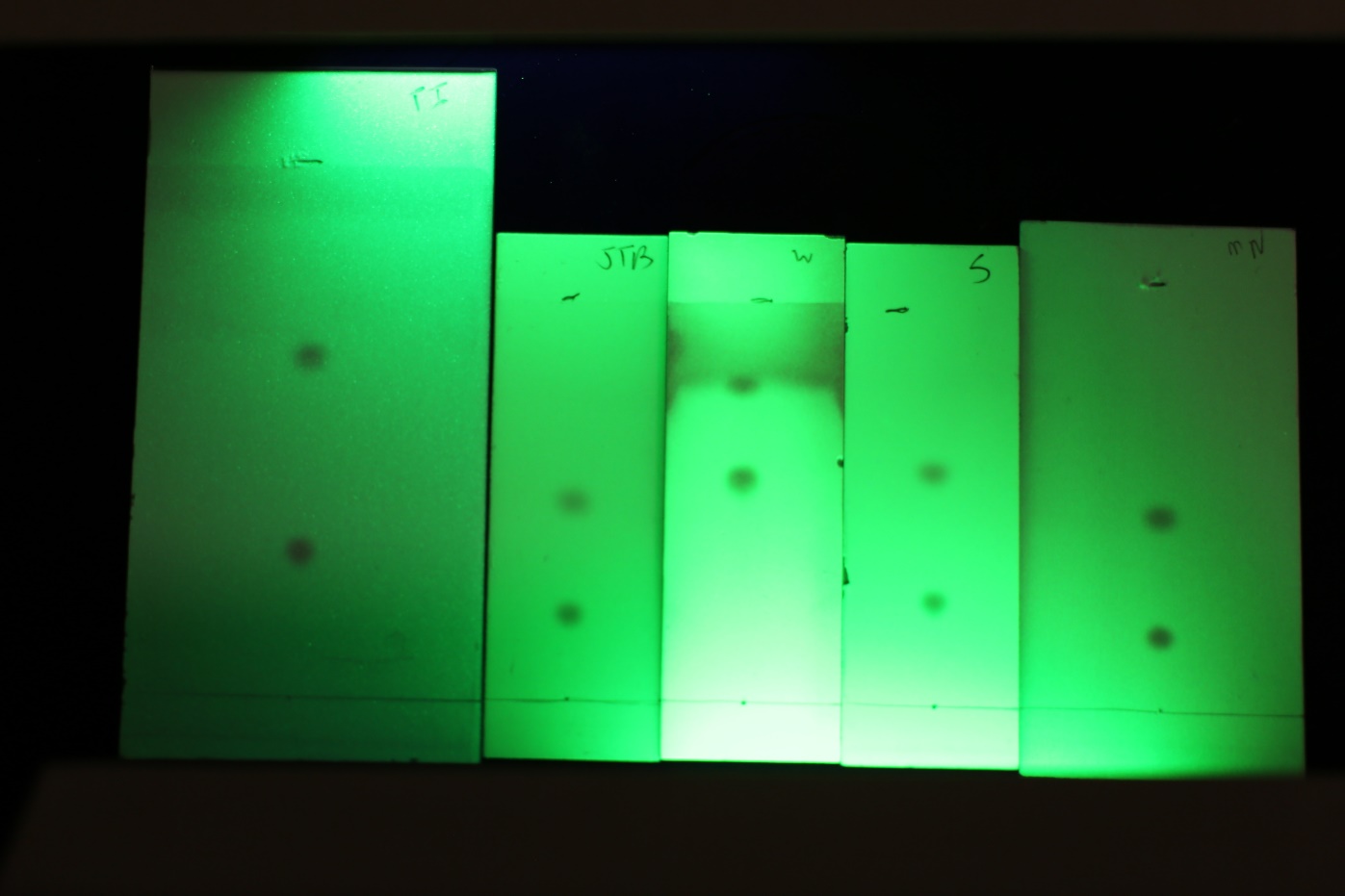
The plates were run in 20:80 hexanes/ethyl acetate v/v. Not only are the predicted column volumes different, but also the relative spot movements are different. The variation in relative retention also affects loading estimates.
|
Plate |
CV 1 |
CV 2 |
| 1 | 1.6 | 3.7 |
| 2 | 2.0 | 4.8 |
| 3 | 1.2 | 1.8 |
| 4 | 1.7 | 3.8 |
| 5 | 2.2 | 5.6
|
Teledyne ISCO universal test mix was run on TLC plates from different manufacturers. The variation between different TLC plates is even more pronounced with this mixture.
Role of the Focus Gradient Generator
To avoid the problem, the Focus Gradient Generator was developed to allow rapid method development within the same time required for a single TLC plate. The scouting run is run on a flash column; the desired peak is chosen, and the column size needed for the purification is chosen. The system then calculates a focused gradient.
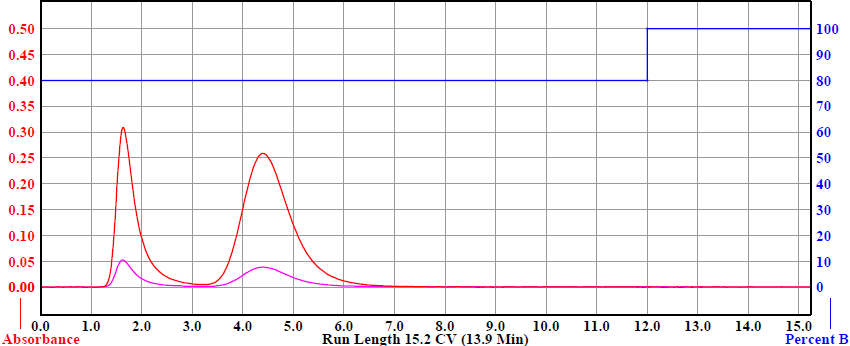
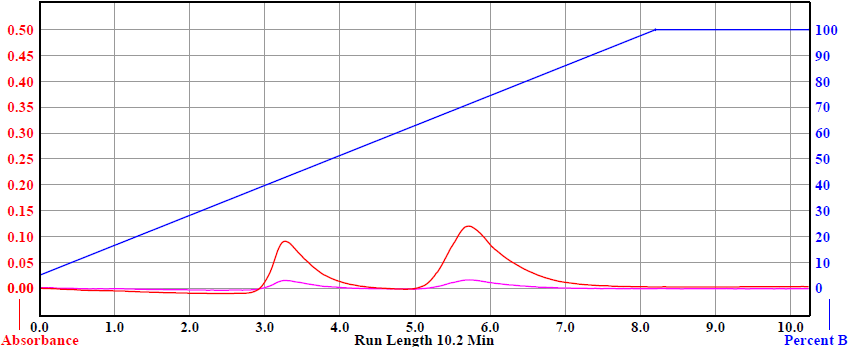
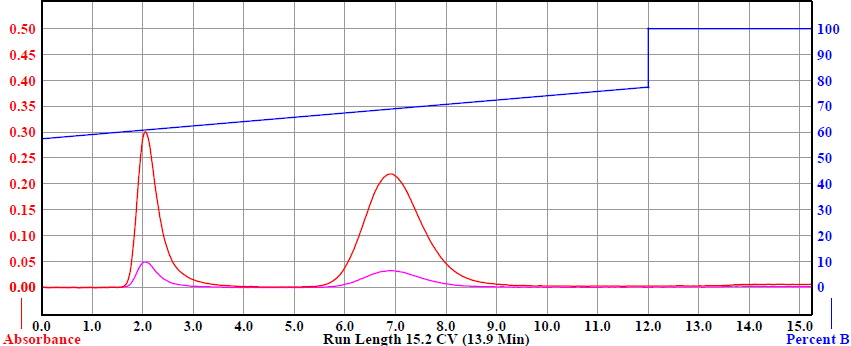
Universal Test Mix runs. Scouting gradient (top, 4 g silica), focused gradient (middle, 40 g silica), isocratic run.
The Focus Gradient Generator is also useful for method development for C18, C8, alumina, and amine columns—TLC plates for these media are generally unavailable in most labs.

